All published articles of this journal are available on ScienceDirect.

Developing a Safety Framework for Construction Health & Safety in the Kurdistan Region: A Systems Approach

Abstract
Introduction/Objective:
Construction is one of the riskiest industries across the world, especially in emerging economies with poor health and safety (H&S) legislation and enforcement compared to fast-track infrastructure development. The present H&S management standards in such environments can be fragmented, causing unabated avoidable occupational hazards that result in inferior project performance. This research article aims to fill existing systemic gaps in H&S management by developing a comprehensive, context-specific framework that can shift atomized practices to an integrative safety culture.
Methods
Based on a systems thinking (ST) perspective, this research adopts a mixed-design method involving induction analysis and deduction model development. This also enables the creation of a comprehensive H&S architecture that maps the relationships between risks and organizational interfaces throughout the project's life cycle. (This model was empirically founded on data collected in the Kurdistan Region of Iraq).
Results
The proposed framework offers a holistic, dynamic H&S performance management system that is about more than just compliance. It clearly identifies the roles, obligations, and desired outcomes of all stakeholders— from government officials to site operators — throughout every step of the project development process. The structure of the framework was confirmed using a two-stage process, including type Exploratory Factor Analysis (EFA) and expert qualitative interviews.
Discussion
This proposed framework is a feasible, logical approach to reducing job hazards while promoting employee health and contributing toward building an enduring culture of safety in construction.
Conclusion
By orienting local site actions with universally applicable standards (e.g., WHO guidelines), the framework may provide project managers, decision-makers, and site managers with a systematic method for integrating safety into project completion, thereby guaranteeing regulatory approval and the sustainability of projects across emerging markets. This contrasts with generic global frameworks, and this paper explicitly incorporates the ‘institutional void’ and ‘regulatory weakness’ of the Kurdistan Region, and hence serves as a baseline for future empirical on-site testing.
1. INTRODUCTION
Despite widespread efforts to enhance safety, construction sites worldwide remain hazardous [1]. This problem is particularly serious in emerging economies such as the Kurdistan Region of Iraq (KRI), where high demand for infrastructure has led to relatively unregulated and rapid growth. This has placed pressure on regulatory capacity, led to fragmented safety regulations, and made enforcement challenging [2]. Compliance-based approaches have been the historical norm, but they have failed to prevent complex and systemic failures that continue to result in high fatality rates [1, 3]. Modern safety science has embraced an ST approach: accidents are not due to deficiencies in individuals (clients, designers, and contractors) alone, but rather failings within the whole project system [4-6]. Despite this, the literature does not contain a unified context-specific systemic safety framework integrated enough to consider such unique managerial and regulatory issues in booming emerging economies [7, 9, 10]. This gap is filled in this research by an advanced framework that assists with systematizing ways to integrate safety into construction project delivery [11].
Although there are frameworks at the international level, they may be predicated on a relatively stable legal environment. The one thing about this work is that it is the first of its kind to model the KRI “institutional void” explicitly. It's not relabeling - it's redesign of safety systems in a region where “Regulatory Weakness” is a root cause.
2. LITERATURE REVIEW
2.1. The Regulatory Vacuum in Emerging Construction Markets
Effective management of Occupational Health and Safety (OH&S) is dependent on a strong legal and institutional framework, but this is frequently insufficient in areas with accelerated infrastructure growth [12, 13]. Although fatal accidents have been drastically reduced by enforced safety regulations, compliance persists as the fundamental challenge for OHS in emerging economies [12], and the law practices in the construction industry in the KRI are not fit for purpose [14]. Importantly, there is an absence of applicable and approved building codes and additional enforcement mechanisms that are specifically designed to address the dangers of construction work [8, 15]. The Kurdistan Regional Government has made several attempts to reform labor legislation, but these reforms have been thwarted by regulatory instability, creating an ongoing legislative vacuum [14]. This institutional failure is reflected in the few on-site labor inspections that take place and a system based on “unwritten contracts” with low penalties for noncompliance [16-18]. This void highlights the necessity of a construction labor code and stronger institutional policing in this locale.
2.2. The WHO Healthy Workplace Model as a Systemic Foundation
To escape from the silo of regulation compliance and concern over safety performance, this study employs the World Health Organization’s (WHO) healthy workplace model as its theoretical basis. The study shares many of the objectives of a Systemic Safety Integration Framework [19], as it focuses on a holistic approach that goes beyond physical risk factors such as:
- Workforce Wellness: Focusing on the physical and mental health of employees [20-22].
- Stakeholder Involvement: Emphasizing the need for workers to be involved in making decisions for the program to work, the framework must meet site-specific considerations and be useful at a practical level [23-25].
- Continuous Improvement: Requiring annual reviews to update and improve safety procedures [1, 26].
By using the WHO model, the study moves on from the reactive state of safety compliance and provides a solid structural base to evaluate today’s H&S status in the construction sector in KRI [27]. This enables the development of realistic and practical guidelines through the involvement of local communities [28] and OSH promotion standards [8]. Figure 1 illustrates the WHO Healthy Workplace Model Diagram.
2.3. The Fragmentation of Traditional and Compliance-based Systems
Current safety management system implementations are still predominantly rule-based and excessively geared toward achieving minimum compliance with regulations [29, 30].
- Reactivity in approach: These systems tend to be reactive, focusing more on accident investigation and reporting (e.g., measuring lost time incident rate) rather than predicting risk factors before they occur and addressing them proactively.
- Safety–Production Decoupling: Conventional models address safety as a self-standing and cost-driving process rather than an integrated component of quality-time-cost management [31]. This decoupling may easily result in safety practices being perceived as discretionary or a barrier to progress, given the high-pressure environment that attends rapid expansion.
- Disregarding Context: Universal standards (e.g., ISO 45001) are great in providing structure, but they often lack the contextual scope required to accommodate indigenous local labor practices, unorganized contractor networks, and cultural norms in the construction sector of emerging economies.
2.4. The Failure to Address Systemic and Behavioral Causes
Current paradigms often overlook the multi-dimensional causes of construction accidents, even though it is rare for accidents to result from just one cause [5, 32, 33].
- The Single-Cause Fallacy: Studies on major incidents have shown that they are caused by system errors that cross organizational and procedural boundaries, not isolated worker carelessness [5, 32, 34]. However, traditional safety training usually focuses on errors as a function of bad workers, without considering how upstream decisions make the quality of work even possible [35-37].
- Non-involvement of Upstream Stakeholders: The focus on the contractor and the worker on site is a key feature of most safety systems. They frequently ignore the deep roots of workplace risks, such as clients (with unreal contract terms and budget pressure) and the design team (ignorance of 'Prevention through Design') [16, 38, 39]. This partial perspective constrains the possibility of an overall risk minimization [39].
- The Behavioral gap: Existing systems often fail to fill the gap between management controls and workers' behavior [23]. Overlooking the psychological components and worker participation can lead to devastating consequences, including a continued failure to adopt the necessary Personal Protective Equipment (PPE) — a core problem identified in the study context [40, 41].
2.5. Systems Thinking (ST)
Systems theory focuses on the (inter)relations between construction constructs and stakeholder behaviors and perceptions of operating processes [42]. Thus, knowing how system components interact is crucial for performance [43]. The H&S management system is a set of rules, procedures, and programs that aim to reduce H&S risks at all levels. According to [44], a system is “a complex thing which comprises related parts acting together as a whole, each part serving the purpose of the system”. This means that everyone in the environment interacts with and has an effect on how the organization behaves. As a result, procedures or elements work together to achieve a certain goal. Systems thinking is crucial for tackling the complex challenges faced in construction projects, enterprises, and sectors [45]. [46] asserts that ST allows individuals to discern patterns where others see only isolated incidents. The main advantage of using the systems theory perspective to examine relationships is that it helps us understand how different parts of the system affect its behavior. The use of this method in this study, therefore, provides both reactive and preventive ways to keep people safe and healthy.
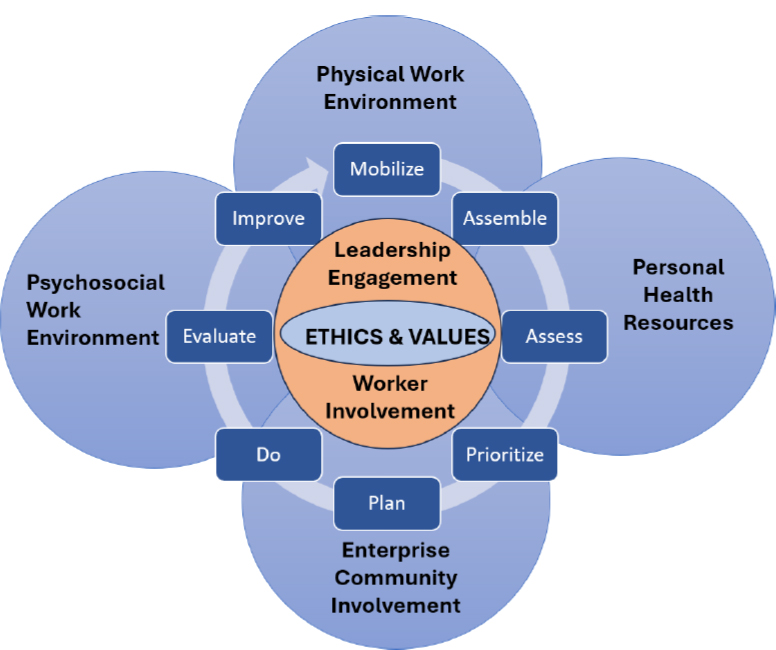
WHO healthy workplace model diagram.
2.6. Synthesizing the Need for a New Framework
Current models of OHS serve as a useful starting point but are unable to handle the systemic nature of safety challenges in the KRI and comparable emerging economies [10, 16], given their reactive, piecemeal approach and dependence on contractors [1, 3, 27]. The literature indicates a strong case for the development of an integrative, comprehensive framework that:
- Transcends the full cycle of accountability for all stakeholders [38, 47, 48].
- Incorporates safety as a key management output and not an isolated compliance expense [19, 49, 50].
- Localizes the Global Best Practices (WHO model, etc.) to the specifics of local regulations, culture, and treatments [51, 52]. The ensuing Methodology section will outline the development of the proposed Systemic Safety Integration Framework, which is designed to address this crucial research/policy need [53-55].
3. METHODOLOGY AND RESEARCH DESIGN
3.1. Research Philosophy and Theoretical Framing
This research follows a pragmatist research philosophy, combined with a mixed-methods design [56], and is undertaken in response to the complicated problem of systemic safety shortfalls within the KRI construction industry. The method utilizes data triangulation [57], which in this case is the blending of both quantitative surveys and qualitative interviews, as well as the inspection of secondary data to confirm the reliability and trustworthiness of the results.
The study is conceptually based on ST [5, 58, 59]. This perspective is necessary for developing a H&S systems approach to safety where safety performance is the focus of the whole project system [3, 60, 61]. It also directs attention beyond single-point failures toward interconnected elements [5, 26].
3.2. Research Hypotheses
Given the systemic failures and deficiencies in understanding that have been identified in previous studies [3, 15, 27], the following hypotheses were formulated to examine the impact on H&S performance of different actors and management practices operating within the KRI’s construction industry:
3.2.1. Stakeholder Contribution to Risk
These hypotheses evaluate the concept that safety performance is a consequence of systemic behavior stemming from upstream project decisions.
H1: Designers contribute to workers’ exposure to risk and hazards at construction sites during the design phase.
H2: Clients contribute to workers’ exposure to risks and hazards at construction sites.
H3: Contractors contribute to workers’ exposure to risks and hazards at construction sites.
3.2.2. Management and Commitment Deficiencies
These hypotheses consider that organizational culture and regulatory climate influence safety performance.
H4: Contractors with an insufficient commitment to health and safety still have a chance of being selected for construction projects.
H5: Lack of H&S regulations at construction sites contributes to workers’ exposure to risks and hazards.
3.2.3. Behavioral and Management Control Linkage
This hypothesis connects poor management with specific unsafe worker behavior.
H6: Lack of management practices at the workplace contributes to workers’ resistance to utilizing PPE. This will expose workers to risks and hazards.
Although the relationships proposed in H1–H6 might correspond to universal safety-related attributes, their empirical underpinning has never been tested under such specific socio-technical conditions of the Kurdistan Region. It is important to test these hypotheses to move from the anecdotal-based foundation of local safety management into a more evidence-based context. By estimating the strength of these relationships using Exploratory Factor Analysis (EFA), the current study can isolate what factors are at play in a 'regulatory vacuum', thus offering the potential for more focused and effective safety interventions.
3.3. Data Collection and Sampling Strategy
Both primary and secondary data were gathered to test the above-mentioned hypotheses and as an input for framework development.
3.3.1. Data Collection Activities at the Primary Level
3.3.2. Secondary Research
Government documents, legislation, labor statistics, and applicable academic literature were critical in giving both context and backing to the research.
3.3.3. Sample Description
3.3.3.1. Quantitative Phase
The list of projects opposed was based on a transversal census released in 2024 by the Ministry of Labour and Social Affairs and the Ministry of Construction and Housing, which identified 205 ongoing construction projects (64 Government projects and 141 Private). The sample was represented by 422 professionals, in order to guarantee representativeness. This distribution (306 private and 116 public respondents) is also in line with the regional project environment, where privately funded commercial and residential developments outnumber publicly financed infrastructure projects by far. This representation is proportional to guarantee the derived framework is based on prevalent economic facts within the KRI construction industry.
3.3.3.2. Qualitative Phase
32 semi-structured exploratory interviews were undertaken in Erbil, Sulaymaniyah, Duhok, and Halabja with Key experts. The purposive sampling of these participants represents a high level of expertise (16 years’ experience on average) required to expose the systemic drivers of the OHS framework.
3.4. Data Analysis and Framework Development
The theoretical model was confirmed by the empirical data, which were statistically analyzed to test the hypotheses and propose the final framework.
3.4.1. Hypothesis Testing
Exploratory Factor Analysis was used to verify the factor structure of the constructs in the questionnaire. The suitability of the data for factor analysis was tested with the Kaiser-Meyer-Olkin (KMO) measure and Bartlett’s Test of Sphericity.
3.4.2. Framework Development
The system safety integration framework was developed at the end of the study based on the major empirical results and experience of the researcher. The framework implements the ST perspective by establishing an integrated structure (causal loop diagram) that will systematically infuse H&S into project management practice.
4. RESULTS
Factor analytic procedures were employed to examine the underlying dimensions of safety performance constructs in the construction industry with respect to each hypothesis. The KMO measure and Bartlett’s Test of Sphericity were conducted to check the suitability of the dataset for factor analysis. KMO was above the recommended value of 0.6, which showed sample adequacy, and Bartlett’s Test was significant (p < 0.05), indicating that correlations between variables were sufficiently large for factor analysis [62, 63]. The tests proved that it was appropriate to continue with the factor extraction and dimension reduction for the identified safety factors.
4.1. Hypothesis 1: Designers Contribute to Workers’ Exposure to Risk and Hazards at Construction Sites during the Design Phase
As exhibited in Table 1, factor analysis (principal component analysis (PCA) followed by Varimax rotation) was con-ducted and two factors were extracted on construction workers’ exposure to design-related risks on site. The first component contained the highly loaded items of unclear design specification (0.892), insufficient design information (0.888), conflicting design information (0.828), and lack of knowledge among designers (0.800), indicating insufficient design information and communication. Component 2 included risks such as late design changes (0.895), insufficient material specifications (0.846), and constructability issues (0.813), which reflect a second factor related to instabilities in the design and construction process. Some elements, such as “disintegration of the design process” and “diversifying in project objectives,” presented a medium loading on both factors, indicating cross-over between information gaps and process breakdowns. The results indicate that there are building construction risks that can be attributed to bad design communication and frequent changes in designs, which emphasizes the importance of integrated design planning and early coordination priorities.
According to this factor analysis, Hypothesis 1 is supported. The results indicate that design is a source of workers’ exposure to risk and hazard on construction sites because of designers' work.
4.2. Hypothesis 2: Clients Contribute to Workers’ Exposure to Risks and Hazards at Construction Sites
A single underlying component was extracted by all the factors in the PCA (Table 2), indicative of client-related factors associated with poor H&S outcomes on construction sites. These included items showing that clients are poorly resourced: financial budgets from clients are inadequate (0.847), clients and consultants are not concerned (0.793), and H&S is not a client objective (0.597) reported high loadings. There is evidence that these are closely related and together comprise a single concept: neglect of client H&S. The research identifies a lack of financial commitment and oversight and conflicting priorities at the client level as the principal drivers of deviance and lack of safety during construction projects.
According to the outcomes of this factor analysis, Hypothesis 2 is supported. The results provide evidence of client impacts on construction workers’ exposure to risks and hazards.
4.3. Hypothesis 3: Contractors Contribute to Workers’ Exposure to Risks and Hazards at Construction Sites
As shown in Table 3, the PCA suggested one dominant factor that contributes to a lack of provision for H&S. All four variables substantially loaded onto this component, with loadings varying from 0.860 to 0.947, implying a high level of internal consistency and confirming that they all measure the same underlying construct. The maximum loading (0.947) was obtained for the perception that H&S are not given due consideration in terms of cost, quality, and time; this was followed by low knowledge among participants (loading = 0.929). The low weighting of money spent on H&S (0.915) and the absence of safety concerns in contract documents (0.860) also made a considerable contribution to this factor. These results indicate that indifference to H&S is a systemic problem driven by economic imperatives, human capital, and record keeping in contractors' operations. One factor extraction supports the one-dimensionality of the measure, suggesting that these items all tap into a larger attitude that fails to emphasize H&S when planning and executing projects.
According to the factor analysis, Hypothesis 3 is supported. The results indicate that construction contractors predispose workers to risks/hazards within construction sites.
| Design-Related Factors |
Component 1 (deficiencies in design information and communication) |
Component 2 (instabilities in the design and construction process) |
Rank | Sig. association between (private vs. public) p-value |
|---|---|---|---|---|
| Unclear design specifications | 0.892 | - | 1 | 0.018* |
| Inadequate design information | 0.888 | - | 2 | 0.021* |
| Conflicting design information | 0.828 | - | 3 | 0.001** |
| Designers’ lack of knowledge about the construction process | 0.800 | - | 4 | 0.000** |
| Disintegration of the design process | 0.759 | 0.502 | 5 | 0.000** |
| Late design changes | - | 0.895 | 1 | 0.019* |
| Inadequate specification of materials | - | 0.846 | 2 | 0.000** |
| Constructability | - | 0.813 | 3 | 0.000** |
| Diverging in project objectives | 0.518 | 0.645 | 4 | 0.000** |
Note: *Significant at level (p<0.05).
** Significant at level (p<0.01).
| Client-Related Factors |
Component 1 (Client neglect of H&S) |
Rank | Sig. association between (private vs. public) p-value |
|---|---|---|---|
| Clients’ insufficient financial budgets contribute to insufficient provision for health and safety | 0.847 | 1 | 0.038* |
| Lack of concern from clients and consultants influences noncompliance with health and safety regulations on construction sites | 0.793 | 2 | 094 |
| Health and safety are not a client objective in the selection of contractors that lack commitment to safety | 0.597 | 3 | 0.000** |
Note: *Significant at level (p<0.05).
** Significant at level (p<0.01).
| Contractor-Related Factors | Component 1 | Rank | Sig. association between (private vs. public) p-value |
|---|---|---|---|
| Health and safety are not regarded as significant compared to cost, quality, and time | 0.947 | 1 | 0.03* |
| Participants’ insufficient health and Safety awareness relating to the nature of their work | 0.929 | 2 | 0.008** |
| Pricing for health and safety from the contractor is minimal to remain competitive | 0.915 | 3 | 0.008** |
| Contract documentation excludes health and safety considerations | 0.860 | 4 | 0.02* |
Note: *Significant at level (p<0.05).
** Significant at level (p<0.01).
4.4. Hypothesis 4: Contractors’ Insufficient Commitment to Health and Safety still has a Chance to be selected for Construction Projects
One factor, the systemic neglect of H&S in contractor selection practices, was identified using PCA, as shown in Table 4. The four items all had high factor loadings (0.828–0.898), which suggests they are strongly related and measure a single construct. The most significant driver (loading = 0.898) was the emphasis on cost, quality, and time above concern for H&S; that is, economic and performance factors far outweigh the issue of safety. These were followed by exclusion of H&S as a prequalification requirement (0.886) and the perception that H&S are not values at the core of projects (0.837). The smallest partial loading (0.828) indicated unsatisfactory establishment of contractor quality assurance processes. Taken together, these findings suggest that there is a tendency to de-emphasize H&S during contractor selection because of the norms of the institutions and procurement criteria. The delineation of one dimension highlights the unidimensional construct of this issue and legitimizes specific reforms in procurement policy and contractor selection models.
Hypothesis 4 is supported by the factor analysis results. The results reveal the limited influence that contracting companies’ H&S commitment has on their chances of being awarded construction projects.
4.5. Hypothesis 5: Lack of Health and Safety Regulations at Construction Sites Contributes to Workers’ Exposure to Risks and Hazards
One larger component (Component I) was revealed among the factors that identified both institutional and systemic elements responsible for the non-adherence to H&S regulations at construction sites, as shown in Table 5. All of the ten variables displayed strong factor loadings (ranging from 0.546 to 0.926), implying that they were highly intercorrelated and pertinent to their latent construct. Factor loadings were largest for poor enforcement of laws (0.926), ineffective procedures for prohibiting procedures of regulations (0.922) and inadequate punishment of violators (0.921), which indicate that enforcement failure was the central barrier to H&S. Other major contributors to the model were lack of training (0.920), lack of supervision (0.920) and ignorance of health and safety issues (0.876), indicating capacity and knowledge gaps. Structural problems, such as corruption (0.804) and lack of rules or funding (loadings from 0.867 to 0.839), contribute still further. The more moderate loading on enterprise size and type (0.546) indicates that it is a less essential but still important predictor. The one component of the combined extraction also supports our interpretation that lack of compliance is linked to a coherent system of regulatory, institutional, and pedagogical deficits in need of wide-ranging policy and administrative change.
| Contractor-Selection Factors | Component 1 | Rank | Sig. association between (private vs. public) p-value |
|---|---|---|---|
| Cost, quality, and time are prioritized over health and safety | 0.898 | 1 | < 0.001 ** |
| Excluding health and safety as a criterion for contractor prequalification | 0.886 | 2 | < 0.001 ** |
| Health and safety are not a recognized project value | 0.837 | 3 | 0.002 ** |
| Insufficient validation of contractors’ quality assurance | 0.828 | 4 | < 0.001 ** |
Note: *Significant at level (p<0.05).
** Significant at level (p<0.01).
| Item Description | Component 1 | Rank | Sig. association between (private vs. public) p-value |
|---|---|---|---|
| Inadequate implementation of laws | 0.926 | 1 | 0.237 |
| Ineffective prohibition procedures | 0.922 | 2 | 0.116 |
| Inadequate punishments for offenders | 0.921 | 3 | 0.008** |
| Inadequate training for health and safety | 0.920 | 4 | 0.068 |
| Inadequate monitoring agencies | 0.920 | 5 | 0.009** |
| Lack of health and safety knowledge | 0.876 | 6 | 0.017* |
| Not enough rules for health and safety | 0.867 | 7 | 0.07 |
| Inadequate funding of the inspectorate | 0.839 | 8 | 0.011* |
| Corruption | 0.804 | 9 | 0.049* |
| Size and type of construction enterprise | 0.546 | 10 | 0.002** |
Note: *Significant at level (p<0.05).
** Significant at level (p<0.01).
| Factor Statement | Component 1 | Rank |
Sig. association between (private vs. public) p-value |
|---|---|---|---|
| Insufficient health and safety engineers on site | 0.902 | 1 | 0.044 |
| Inadequate hazard awareness | 0.899 | 2 | 0.023 |
| Insufficient health and safety training | 0.896 | 3 | 0.170 |
| Insufficient attention from management | 0.888 | 4 | 0.072 |
| Inadequate personal protective equipment | 0.887 | 5 | 0.105 |
| Health and safety culture among workers | 0.867 | 6 | 0.180 |
| Inadequate supervision | 0.754 | 7 | 0.003 |
Note: *Significant at level (p<0.05).
** Significant at level (p<0.01).
Hypothesis 5 is supported by the factor analysis. The results indicate that poor H&S measures on construction sites expose workers to risks and hazards.
4.6. Hypothesis 6: Lack of Management Practices at the Workplace Contributes to Workers’ Resistance to Utilizing PPE. This will Expose Workers to Risks and Hazards
A single significant underlying factor for workers' opposition to using PPE on construction sites was retained by PCA, as depicted in Table 6. All seven items had a high loading on this component (0.754–0.902), suggesting that they are highly intercorrelated and indicative of a single construct. The target with the highest loading was found to be “Inadequate health and safety engineers on site” (0.902), followed by “Inadequate hazard awareness” (0.899) and ” Inadequate training” (0.896), indicating the importance of organizational support and worker training. Other reasons, such as lack of management focus, bad (PPE) availability, poor safety culture, and poor supervision, further support the finding that institutional deficiencies and educational weaknesses figure prominently as the cause of resistance to PPE being used. This might indicate that holistic improvements are needed at the site level of safety infrastructure, training, and managerial support to improve the PPE compliance of workers.
Consistent with the factor analysis, Hypothesis 6 is supported. The results suggest that a lack of supervisory mechanisms in work settings promotes resistance to using PPE, which results in workers being exposed to harmful and hazardous conditions.
4.7. Analysis of Interview Data
The interview data were analyzed thematically. The transcripts were reviewed and recoded using systematic coding frameworks, based on the major themes arising from the questionnaire phase. The primary themes included:
- Inadequate regulatory enforcement
- Insufficient awareness and training
- Insufficient management commitment
- Risky behavior by employees
- Lack of supplies (PPE and safety gear)
- Regular risks (falls, accidents with machinery, electricity)
Some additional themes emerged in the course of the study that were less evident from the questionnaire responses, in particular, about how written company policy differs very substantially from what actually happens on site.
4.8. Integration of Questionnaire and Interview Findings
The interviews offered significant qualitative verification and corroboration of the quantitative findings obtained from the questionnaire. The survey findings revealed a general lack of enforcement, and the interviews illuminated why that is: Inspectors have little power, political influence overshadows decision-making, and legal consequences are few.
It was also identified in the interviews that although a lack of training was cited in the questionnaire responses, contractors intentionally do not invest in training workers, believing it to be a luxury. The interviews also uncovered hidden hazards, including under-reporting of accidents and political favoritism that shrouds some contractors from punishment.
Representatives from different areas had together complained about the absence of strong and legally enforceable occupational safety standards for the construction companies in the Kurdistan Region. The concordance of the quantitative and qualitative information contributes to the internal validity of the results and grants an overall view of the present situation of OHS in the area.
The interviews also found undisclosed hazards, including accidents that go unreported and political favoritism that protects some contractors from punishment. These qualitative insights help explain the statistical determinants from the Exploratory Factor Analysis (EFA), where the survey quantifies the magnitude of safety failure, the interviews plot what underpins those numbers: systemic logics like power imbalances between inspectors and politically connected firms.
In addition, these results provided information to adjust the 'balancing' and 'reinforcing' loops in our CLD. Take, for instance, the “contractor-induced reinforcing loop”, motivated not only by insufficient finance but also the qualitative observation that training is perceived as a 'luxury', not an imperative. The consistency of the quantitative and qualitative information achieved in this study is an indication of the internal validity of the findings, so this provides a general picture of current OHS status in the region.
4.9. A Holistic Dynamic Connection of all the Variables in a Healthy and Safe Workplace
Although the Exploratory Factor Analysis (EFA) supports the statistical significance and structure of these variables, in this section, we use systems thinking logic to chart how functional influences operate and feedback amongst each other within a safety environment in practice.
The causal loop diagram visually illustrates the inter-relationships among many variables within a system and elucidates the system's behavior, including feedback loops. A causal loop diagram comprises variables, connections among those variables, the polarity of the connections, and the polarity of the loops.
ST models are manifested in three fundamental processes:
- Reinforcing feedback loop: A reinforcing loop transpires when a negative or positive behavior promotes analogous behavior in the future. The loops are perceived as catalysts for growth through the integration of novel ideas and modifications within the system.
- Balancing feedback loop: A balancing loop serves to equilibrate the activity of a structure. It includes the actions taken to maintain the objectives, purposes, and productivity.
- Delays: Delays take place between the action and the consequence of that action.
The developed model is based on the significant results of the empirical studies conducted in this study and also on the researcher’s experience in construction management. The main purpose of this research is to examine the various determinants that influence unhealthy and at-risk working practices in the construction industry in the KRI. The model that is suggested has been developed from the results of data analysis using Vensim 8.1. This method facilitates real-time simulation and analysis of what-if scenarios to gain insights into risk management strategies for construction project decision-making [64].
The Exploratory Factor Analysis (EFA) only reveals the relevant latent factors and associated statistics however, the causal arrows in the Causal Loop Diagram (CLD) are determined from consensus expert judgment and established systems-thinking research. Therefore, the Causal Loop Diagram (CLD) is a conceptual causal model that emerges from the statistical strength of our empirical data.
In Figure 2, the state of H&S at work is defined as a bounded system where the healthy, safe workplace is balanced with an unhealthy workplace. In the positive feedback loop, a useful and secure working environment reinforces effective management practices, decreases risk, and reduces the accident rate. This fosters the organization’s involvement in H&S, strengthens H&S standards, encourages client participation, and sets the foundation for a positive office culture with a good design process. In contrast, contractor-induced reinforcing loops can make the work environment hazardous through unsafe working practices, client disrespect for safety commitments, and weak regulatory pressure that results in hazards (unsafe acts). This increases the number of incidents or accidents, thus reinforcing the dangerous state. The balancing loops are critical to the system as they ensure stability. As the number of accidents and dangerous situations increases, organizational management selects contractors more carefully, ensuring that their activities create safe working conditions. Collectively, these self-reinforcing feedback loops reflect the complexity and systemic nature of OHS as a joint output of organizational, client, contractor, regulatory, and design factors, collectively known as the safety climate. Although the arrowed connections in these feedback loops are based on known systems-thinking theory and qualitative expert consensus, the existence of each with its importance in relation to other ones (e.g., Regulatory Pressure, Management Practices, Organizational Involvement) is empirically found in the Factor Loadings as the reliability scores reported by Exploratory Factor Analysis (EFA) results.
Though System Dynamics software for designing structural connections was used to trace the interconnections of OHS framing, this qualitative representation in the form of Causal Loop Diagram (CLD) predominantly constitutes our analysis. It is a hard diagnostic tool for identifying feedback structures -like the 'Regulatory-Contractor' balancing loop-that regulates the KRI Construction Sector. While a full quantitative simulation of the Stock-and-Flow model is out of the scope for this baseline study, we believe that the current CLD already offers, at this stage, a structural logic pattern and empirically validated state transition paths needed in future testing/predictive scenarios. This study prioritizes mapping these endogenous drivers and establishes this minimal architectural framework required for any further quantitative system analysis.
4.10. The Process of Developing a Practical Framework
This section outlines the procedures used to formulate recommendations for advancing OHS in the construction sector, as well as the methodology employed to develop the practical guidelines.
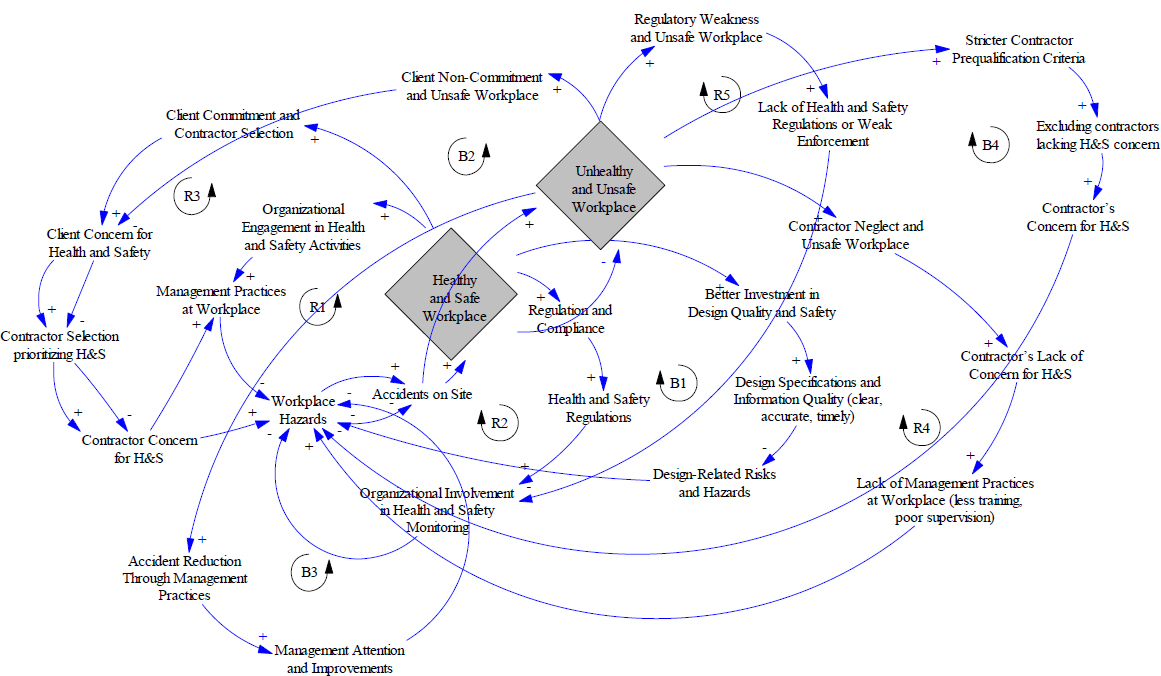
A holistic causal loop diagram of all the variables in a healthy and safe workplace.
The researcher utilized the findings from the literature review (the WHO Healthy Workplace Model) as the theoretical framework, along with the key study findings, to develop a practical framework that enhances OHS in the construction industry. Figure 3 below outlines the systematic procedure used to develop the practical framework.
4.11. Structure of the Practical Framework
Earlier, Figure 2 presented the process used to develop a useful model for integrating OHS into the construction industry in emerging economies. The framework is organized by the major stages of a project and encapsulates roles and responsibilities of designers, contractors, government jurisdiction agencies/ organizations, professional bodies, workers' un-ions and project management.
At its core, the framework employs the RACI model, an established global process for traceability of roles in project management. It assigns each stakeholder to one of a handful of actions or decisions and denotes them as responsible (those who act), accountable (those who are ultimately answerable for the outcome and guarantee that it will happen as planned), consulted (those providing input), or informed (those kept updated) for every action or decision. The use of the RACI methodology not only clarifies roles and reduces ambiguity, but also facilitates effective communication and collaboration among a variety of project stakeholders in alignment with best practice literature recommendations [65].
Figure 4 presents the key elements of this context-specific framework as an applied resource for improving health, safety, and well-being on construction industry sites in emerging economies.
The objectives of the actions listed under Phase 1 Initiating and Design are the following: introduce Safety in Design, a proactive process to eliminate or mitigate hazards at the source (the design stage), which is a modern best practice; mandate early integration of emergency features into the design (e.g., permanent access/exits), ensuring their structural integrity and accessibility from the start; formalize a process to ensure designs are safe and feasible before construction starts, avoiding the creation of high-risk tasks later; mandate a formal, project-specific H&S policy with measurable milestones; establish a detailed management system; introduce compliance by law, requiring mandatory certification for key managerial and design personnel, not just basic training for a single worker; mandate a proactive, formal risk register and baseline assessment before work starts, shifting the focus from recording after the fact to management before the hazard; and mandate a site-specific, drilled emergency response plan and explicit H&S budget allocation to formalize and fund safety.
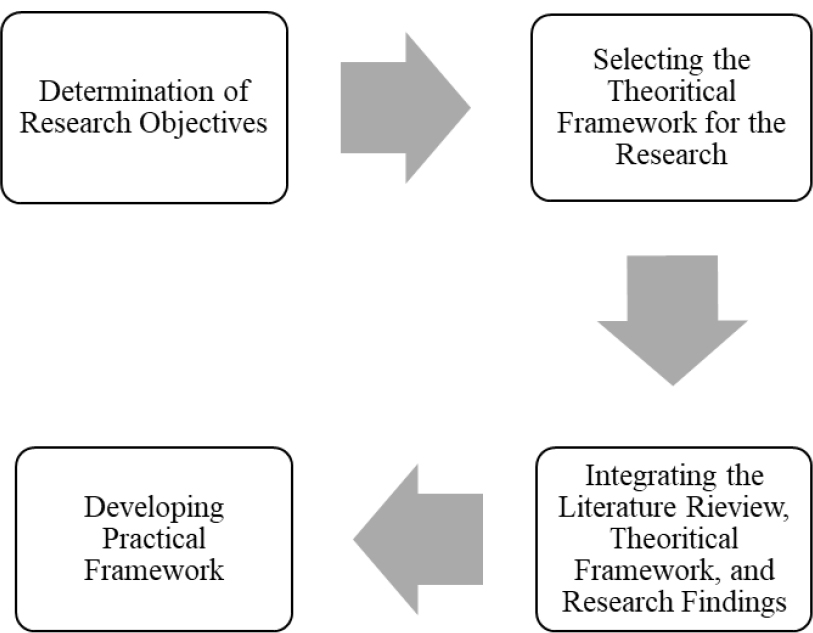
The process of developing a practical model.
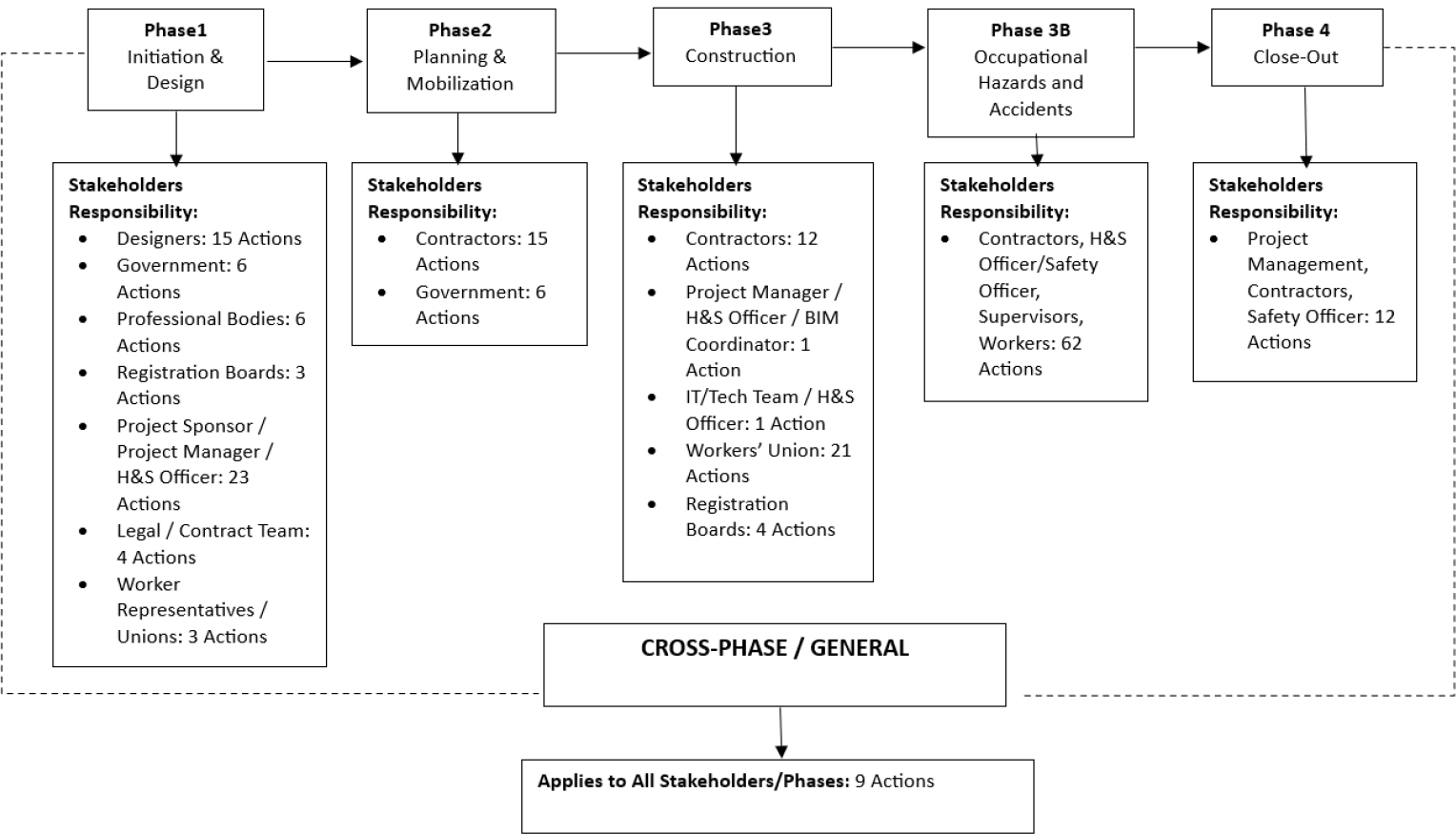
A flowchart of the context-specific framework for construction H&S in emerging economies.
The objectives of the actions listed under Phase 2 Planning and Mobilization are the following: guarantee that personnel are proficient and cognizant of safety protocols; mitigate accidents and hazardous activities on-site; safeguard employees from physical, chemical, and environmental risks; ensure uniform safety standards are upheld across all teams; facilitate prompt, systematic reactions in emergencies; and mitigate injuries.
The objectives of the developed actions for Phase 3 and Phase 3B Construction, Occupational Hazards and Accidents are as follows: mandate explicit mitigation strategies (suppression, barriers) and compliance with specific environmental rules (waste disposal), which is a higher standard than the current norm; introduce Key Performance Indicators (KPIs) and routine internal audits, systematizing accountability and follow-up far beyond the required external committee checks; mandate specific, preventative protocols (storage, labeling, lifting gear) and ergonomic training; add rigor to routine cleaning schedules and explicit hygiene regulations; converse to digital, real-time, cloud-based, and BIM integrated safety documentation, enabling a significant upgrade in the ease of use and access compared to handling paper files; introduce advanced, real-time safety technology (AI, drones, wearables) for continuous monitoring; introduce a Permit-To-Work system for high-risk works; mandate certification for operators and detailed daily checklists; set a high-er standard for the safe operation and maintenance of machinery; mandate specific engineering controls (GFCIs, grounding) and strict labeling protocols for electrical safety, which is more rigorous than general injury prevention; systematize detection systems, daily controls and tailored training for all workers; implement site-level control (signposted paths, marshals) to direct internal traffic; mandate structured procedures (e.g., specific scaffolding permits, rescue plans, detailed trench shoring) for these high-risk activities; mandate specific engineering controls (100% tie-off, permanent noise monitors, ventilation, chemical substitution) and continuous, advanced training (VR/Simulators) for all workers and HSE induction for visitors, elevating the overall training culture; and implement explicit DEI (Diversity, Equity and Inclusion) requirements and physical provisions.
The objectives of the actions listed under Phase 4 Close-out are as follows: preserve records for all events occurring during construction, including near misses, and confirm that remedial actions have been finalized, resulting in a full auditable history; Conducting safety review and dissemination of insights, enhancing the safety culture and protocols for future initiatives; specify preventive measures for the high-risk deconstruction stage, including establishment of hazardous waste disposal checks and imposition of a final safety inspection before handover; require a formal, end internal audit looking at KPIs far exceeding the need for official inspections and thus closure reports.
Lastly, the objectives of the actions listed under Cross-Phase/General are the following: introduce a modern holistic worker wellbeing and equity framework by addressing gender-sensitive amenities/PPE, anti-harassment, and inclusive training, moving beyond the physical safety minimums; establish a formal, continuous learning system through weekly, participatory sessions, a digital/mobile platform, and incentives; and use a training logbook to auto-schedule refreshers, introducing systemization and fostering a stronger safety culture.
In order to overcome the institutions' constraints in the Kurdistan Region, the proposed framework is set in a prioritization matrix (Table 7). This sequential process prioritizes the most important low-cost administrative and design-stage reforms, before costly technological shifts.
| Implementation Horizon | Priority Level | Key Actions (Integrated from Research Findings) | Resource Requirement | Feasibility in KRI Context |
|---|---|---|---|---|
| Phase 1: Foundation & Design (Short-term: 0–12 Months) | Critical (Priority 1) | Safety in Design: Address the cause of risks; Introduce H&S policies on the project level; Formal risk registers; Direct funding for safety. | Low: Policy driven; needs policy decisions, not high capital. | High: Deals with the KRI ministries’ lack of enforcement. |
| Phase 2: Operational Standards (Medium-term: 1–2 Years) | High (Priority 2) | Mobilization & Site Control: Permits-To-Work systems; Mandatory certification for operators of machinery; Internal KPI audits; Comprehensive management systems (aligned with ISO). | Moderate: Demands coordination between government inspectors and contractors. | Moderate: Would have to depend on the training of a “skilled” labour force as mentioned in the interviews. |
| Phase 3: Advanced Systems (Long-term: 2–4 Years) | Strategic (Priority 3) | Technology & Culture: Safety tied to BIM; AI/Drone oversight; VR/Simulator instruction; DEI (Diversity, Equity, and Inclusion) mandates. | High: Requires extensive technology and digital infrastructure | Strategic: Seeks to achieve a longer-term change from ‘paper compliance’ to a mature safety culture. |
| Phase 4: Feedback & Close-out (Continuous/End) | Systemic | Learning Loops: End-of-Project Safety Reviews; Digital/Cloud Documentation; Deconstruction Stage Preventive actions. | Moderate: It calls for a transition in data infrastructure from paper to digital systems that operate in real-time. | Moderate: Critical for better future projects under the “Systems Thinking” worldview. |
5. DISCUSSION
5.1. Validation Strategy
With respect to the validation of the proposed model, a two-stage Internal Validation is conducted: (1) Construct Validity using Exploratory Factor Analysis (EFA) that ensures how well-defined variables reflect underlying dimensions of safety and (2) Content Validity through expert qualitative interviews. Empirical Performance Validation (i.e., reduction in accidents) is the end-to-end goal; however, not having centralized accident reporting databases accessible in the KRI at this time means that longitudinal empirical testing is a subsequent stage of research. Therefore, the current study supplies the necessary evidence-based compass to guide any site-level implementation.
5.2. Unique Contribution to the KRI Context
The results of the Exploratory Factor Analysis confirm that ‘Regulatory Weakness’ is the most important predictor of an ‘Unsafe Workplace’ in this study. This contrasts with the WHO-framed models that require robust governmental supervision. It is by including ‘weaknesses’ as an essential part of that system that this work offers a diagnostic mechanism created specifically for the transitional globalizing and structural limitations that characterize so much of what we refer to as post-conflict / developing world economies.
6. LIMITATIONS OF THE STUDY
Implications for practice, while our study presents a systems-based approach on the extent of OHS in the KRI, several limitations should be noted. One, the cross-sectional sampling technique means that data collected results in a ‘snapshot’ of the industry at one point in time rather than changes over time. Second, although the quantitative sample is large (n=422) and therefore statistically robust, we were obliged to use convenience non-probability sampling because there are no centrally held national lists of construction workers, resulting in potential selection bias. Third, the qualitative results also carry a degree of subjectivity associated with expert interviews. Lastly, the distinct social, political and legal situation of the KRI leads to a limited generalizability of the findings in other international contexts.
CONCLUSION
The empirical evidence from this study supports the underpinning assumption that safety shortfalls within the construction industry in settings such as KR are systemic and not due to random failure. The strong evidence for H1, H2, and H3 supports the argument that poor safety performance is a direct result of decisions taken at all stages of the project process by designers, clients, and contractors. This finding contrasts with the prevalent and fragmented safety management concept adopted by emerging economies, as it proves that safety improvement requires an intervention extending upstream to farther away from the construction site, securing the mandatory implementation of Prevention through Design principles. Lastly, the confirmation of H4 and H5 also reveals the presence of a market imperfection; even though there is a continuing gap and limited adherence to regulations, this does not seem to influence the contract selection parties. Importantly, the support provided for H6—which connects deficient management practices with workers’ lack of motivation to wear PPE—lends legitimacy to the claim that noncompliance is a result of system failure, not individual complacency. This supports the call for an integrated approach that encompasses both management and psychosocial factors.
To address these interconnected failures, the developed multi-phase OHS management framework is structured as a necessary break from reactive, execution-based regulatory compliance and a move toward a proactive, integrated, and technology-enabled safety culture management. By formalizing the concept of Systemic Safety Integration within this context-specific framework, the existing gap in knowledge (identified from the literature) is addressed and explicitly put into practice using four interrelated phases. Phase I stops system hazards at their source, Phase II establishes organizational control by way of mandatory intervention via supervisor certification, and Phase III engages a transformational advancement in technology by applying advanced safety intelligence (AI, BIM, wearables), thereby monitoring hazards in real time. Phase IV establishes hazardous waste disposal checks and the imposition of a final safety inspection before handover. This system approach to safety management implies that it is not an item on a checklist, but it is about managing safety as an ongoing quality-driven process.
The development of this context-specific framework has important policy and practice relevance not only for the KRI but more widely for emerging economies that find themselves at similar stages of rapid growth within a weak institutional environment. The model offers a template for governments to adopt and enforce holistic laws to make stakeholders accountable and justifies fortifying legislation by applying the HS aspect to preventing risk. It also provides sustainability, cost, and time arguments from results attained through H&S instruments. Combining worldwide best practices (i.e., the WHO model with a worker health and wellbeing focus) with local enforcement strategies, this research adds to global OHS knowledge and provides a potent Systemic Safety Integration feature for reducing occupational risks, stimulating worker health, and realizing sustainable project outcomes in hazardous construction markets around the globe. Finally, although this framework is supported by professional and statistical consensus, it represents a baseline for future empirical site-testing once centralized infrastructure becomes available in the region.
AUTHORS’ CONTRIBUTIONS
The authors confirm contribution to the paper as follows: F.H.: Conceived and designed the study; D.J.: Conducted the experiments and collected the data; A.O.: Performed the statistical analysis. All authors contributed to data interpretation and manuscript drafting. All authors critically reviewed and approved the final version of the manuscript and agreed to be accountable for all aspects of the work.
LIST OF ABBREVIATIONS
| CLD | = Causal Loop Diagram |
| CPM | = Construction Project Manager |
| EFA | = Exploratory Factor Analysis |
| ERP | = Emergency Response Plan |
| H&S | = Health and Safety |
| HR | = Human Resources |
| HSE | = Health, Safety, and Environment |
| ILO | = International Labor Organization |
| KMO | = Kaiser-Meyer-Olkin |
| KRG | = Kurdistan Regional Government |
| KRI | = Kurdistan Region of Iraq |
| OHS | = Occupational Health and Safety |
| PCA | = Principal Component Analysis |
| PPE | = Personal Protective Equipment |
| ST | = Systems Thinking |
| WHO | = World Health Organization |
ETHICS APPROVAL AND CONSENT TO PARTICIPATE
This work is an observational study with professional experts’ interviews and anonymous surveys. This research article doesn't contain any clinical studies or studies with human participants performed by any of the authors, so ethical approval is not necessary according to Mandatory Written Authorization from the Salahaddin University, Institutional Review Board/ethical committee.
HUMAN AND ANIMAL RIGHTS
The experiment was carried out in full compliance with the Helsinki Declaration.
CONSENT FOR PUBLICATION
All participants provided written informed consent to publish their responses and any accompanying data.
AVAILABILITY OF DATA AND MATERIALS
The data and supportive information are available within the article.
ACKNOWLEDGEMENTS
The authors would like to express their appreciation to (Salahaddin University and Erbil Technical Engineering College) for their continued support throughout this study.