All published articles of this journal are available on ScienceDirect.

Challenges in Monitoring the Implementation of Disaster-Resilient Building Regulations: A Delphi Study in Kerman Province, Iran

Abstract
Introduction
In recent years, alongside natural disasters such as earthquakes, unsafe construction practices have contributed to a rise in incidents in Iran. Adherence to building codes and safety standards is crucial for mitigation. This Delphi study in Kerman Province identifies challenges in monitoring the implementation of construction laws and regulations.
Materials and Methods
A qualitative approach using the three-round Delphi method was employed with 30 experts (≥10 years’ experience). Round 1: Open-ended questionnaire responses were thematically analyzed (Cohen’s Kappa = 0.82). Round 2: Experts ranked 21 identified challenges on a 5-point Likert scale. Round 3: Results (means/SDs) were reviewed for consensus (≥75% agreement). Data were analyzed via MAXQDA and SPSS v26.
Results
Challenges were categorized into supervisors (11 subcategories) and tools/interactions (10 subcategories). Top priorities included multiple authorities in construction (mean = 4.7, SD = 0.3, 90% agreement) and imbalance between violation benefits and fines (mean = 4.6, SD = 0.4, 85% agreement).
Discussion
These systemic issues, driven by urban growth, inadequate oversight, and inter-ministerial coordination gaps, align with global studies on weak enforcement and training deficits, highlighting institutional fragmentation and incentive misalignments as key barriers to regulatory compliance.
Conclusion
Recent disasters, such as Metropol Abadan (2022 collapse: 41 deaths due to non-compliance) and Plasco (2017 fire: 22 deaths from outdated practices), underscore the urgent need to address these challenges through unified oversight and incentives to enhance disaster-resilient practices.
1. INTRODUCTION
Alongside the rapid growth of development and implementation of civil projects in the country, the statistics of incidents in this sector have unfortunately shown an increasing and concerning trend in recent years [1]. While safety is pursued as a structured concept in many industries and factories, with proactive incident management and meticulous planning, it is observed that in civil projects and schemes, safety is approached in a rudimentary manner, relying solely on passive management. The natural consequence of this approach is the continuous rise in the number of incidents in the country’s projects [1].
In addition to man-made incidents, another issue that major cities worldwide grapple with is natural disasters, particularly earthquakes [2]. By applying urban planning principles and concepts such as urban form, texture, structure, land use, communication networks, and urban infrastructure, the impacts and consequences of natural disasters can be significantly mitigated [3]. Iran’s geographical expanse is among the most vulnerable regions on Earth in terms of the likelihood of such incidents, particularly earthquakes, which annually cause substantial loss of life and property [4].
The deadliest natural disaster of 2003 was an earthquake that struck at a depth of 8 kilometers beneath the city of Bam in Kerman Province. The construction methods in this city involved old mud-brick structures with heavy roofs. When the earthquake tremors began, walls crumbled, and heavy roofs collapsed. The destroyed houses claimed the lives of 41,000 people. Earthquakes do not kill people; buildings do [5]. One of the critical and fundamental measures to reduce earthquake risks is building reinforcement. The construction industry, in terms of capital and workforce, is the largest in our country. Therefore, to optimize the use of these resources and reduce vulnerability to earthquakes, reinforcement and proper utilization of these assets are essential [6]
One of the most important actions to mitigate the effects of earthquakes and man-made incidents, such as the Metropol Abadan disaster, is adherence to building codes and safety standards [6]. To this end, the National Building Regulations have been established by the Engineering Organization in our country. The National Building Regulations are a set of technical and executive guidelines for design, supervision, and construction operations, including demolition, renovation, expansion, repair, major restoration, change of use, and building operation, aimed at ensuring safety, proper utilization, comfort, hygiene, and economic benefits for individuals and society. Despite the existence of such regulations, it is unfortunately observed in some reconstruction projects that even a low-intensity earthquake can cause damage to buildings from the outset of construction, indicating non-compliance with construction laws and technical standards, as well as a lack of attention to the future consequences of this issue [7].
While laws are a necessary condition for establishing order in various dimensions and domains, they are not sufficient. No matter how meticulously and comprehensively laws and regulations are prepared and approved, if there are bottlenecks or deficiencies in the implementation and supervision stages, the laws become impractical documents and are archived. Therefore, for proper implementation, laws require precise supervision and inspection. The lack of oversight in the execution of laws and guidelines may sometimes lead implementers to act, intentionally or unintentionally, against the regulations, thereby undermining the sanctity of the law and the lawmaker.
This study offers a novel approach by employing the Delphi method to systematically prioritize 21 implementation challenges of the National Building Regulations in Kerman Province, a high-seismic-risk region in Iran, through iterative consensus among 30 experienced experts. Unlike prior Iranian research, which often surveys construction safety broadly without expert-driven prioritization (e.g., [14]), this investigation provides a context-specific, actionable framework for regulatory enforcement. Globally, it extends resilience and governance literature (e.g., [Twigg, 2012]) by linking local findings to theories of institutional fragmentation, addressing a critical gap in understanding disaster-resilient building practices across diverse socio-political contexts. This dual focus on local applicability and international relevance underscores the study’s potential to inform both national policy and global disaster risk reduction strategies.
It is worth noting that thorough supervision and ensuring that builders and designers adhere to these laws will significantly reduce various damages during major crises. Therefore, this study was designed and conducted to identify the challenges of monitoring the implementation of construction laws and regulations in Kerman Province, located in one of the country’s earthquake-prone regions. The target population in this study included individuals involved in the Engineering Organization, civil engineering departments of universities, technical and engineering faculties, prominent contractors in the city, and municipal supervisors, who were purposefully selected.
2. MATERIALS AND METHODS
This research was conducted using a qualitative approach with the Delphi method, implemented in three rounds. The Delphi method was chosen due to its ability to gather expert opinions and achieve consensus on complex issues.
2.1. Population and Sampling
This study involved human participants (30 experts who participated in interviews and the three-round Delphi process). The research was conducted in accordance with the Declaration of Helsinki. Ethical approval was obtained from the Research Ethics Committee of Kerman University of Medical Sciences (Approval Code: IR.KMU.REC. 1401.259). All participants were fully informed about the study objectives and procedures, and written informed consent was obtained from each participant prior to the first round of the Delphi process. Participation was voluntary, and the anonymity and confidentiality of all responses were strictly maintained. Participants were experienced professionals in the construction and engineering sector in Kerman Province. Although exact individual ages were not recorded (as they were not deemed relevant to the expert Delphi process), based on their professional roles and typical demographics of licensed engineers and supervisors in the Iranian Construction Engineering Organization, their ages approximately ranged from 35 to 60 years.
2.2. Data Collection Tools
Round 1: An open-ended questionnaire was designed to initially identify challenges from the experts’ perspectives (Table 1). Responses were coded using thematic analysis. The open-ended questionnaire in Round 1 comprised ten specific prompts, including ‘What are the most significant legal gaps in ensuring precise supervision of proper construction execution? and What are the primary legal contradictions in the supervision and execution of buildings?’ Responses were independently coded by two researchers using an inductive approach, with inter-coder reliability assessed via Cohen’s Kappa (κ = 0.82), indicating substantial agreement. The software MAXQDA was utilized to manage coding, track themes, and ensure consistency across the 30 expert responses, which were anonymized to minimize bias.
Round 2: The list of challenges identified in the first round was presented to the experts, who were asked to rank the importance of each challenge on a Likert scale (1 = least important, 5 = most important).
Round 3: The results of the second round (including the mean and standard deviation of rankings) were presented to the experts for final review to reach a consensus. In Round 2, the 21 identified challenges were presented to experts via an online platform, with a 5-point Likert scale used for ranking. The response rate was 93% (28 of 30 experts), and a two-week response window was provided. Round 3 involved sharing the aggregated results (means and standard deviations) for review, maintaining anonymity to encourage unbiased feedback, with a similar two-week timeline to achieve the ≥75% consensus threshold.
2.3. Data Analysis
Qualitative data (from the first round) were coded using thematic analysis with MAXQDA software.
Quantitative data (rankings from the second and third rounds) were analyzed by calculating the mean and standard deviation. Quantitative data (rankings) were analyzed using SPSS v26, with means calculated as μ = Σx/N and standard deviations as SD = √[Σ(x-μ)2/N]. No inferential statistics (e.g., P-values) were applied, consistent with the descriptive nature of the Delphi method. Sampling was purposive, targeting 30 experts with ≥10 years’ experience in construction regulation, selected to represent diverse roles (e.g., 43.3% senior managers, 20% operational staff), with controls for bias implemented through anonymous iterations and consensus validation.
| Challenges with a mean importance score of ≥4 and ≥75% agreement were identified as key challenges. | Questions |
|---|---|
| 1 | What are the legal shortcomings that have led to the non-implementation of a significant portion of the National Building Regulations in practice? |
| 2 | How do you evaluate the shortcomings and potential contradictions between laws and municipal regulations regarding the sale of building density? |
| 3 | Is there a legal gap concerning the direct financial relationship between the employer and the supervising engineer, and if so, what are the reasons for this gap in the construction sector? |
| 4 | Are there legal deficiencies or issues in the field of qualifying and determining competent contractors? |
| 5 | Is there a contradiction between the Engineering Organization Law and the Technical and Executive System Law for government civil projects? Please explain. |
| 6 | What are the most significant legal gaps in ensuring precise supervision of proper construction execution? |
| 7 | What are the primary legal contradictions in the supervision and execution of buildings? |
| 8 | What are the weaknesses in existing construction laws that cause their ineffectiveness in practice? |
| 9 | How do you assess the impact of multiple authorities in the construction sector on the quality of construction execution in the country? |
| 10 | Overall, what is your opinion on the problems and issues with laws and regulations in the field of construction? |
3. RESULTS
Of the 30 participants in the interviews and expert panel, 100% were male. The sample consisted of 43.3% senior managers, 36.7% middle managers, and 20% operational experts. In terms of education, the majority of participants held a bachelor’s degree (46.7%). The research findings were categorized into two groups: challenges related to construction supervisors and challenges related to monitoring tools and interactions. The comparative mean importance of the identified challenges, particularly those related to monitoring tools and interactions, is presented in Fig. (1). Similarly, the comparative mean importance of challenges related to monitoring tools and interactions is shown in Fig. (2). These challenges include the following:
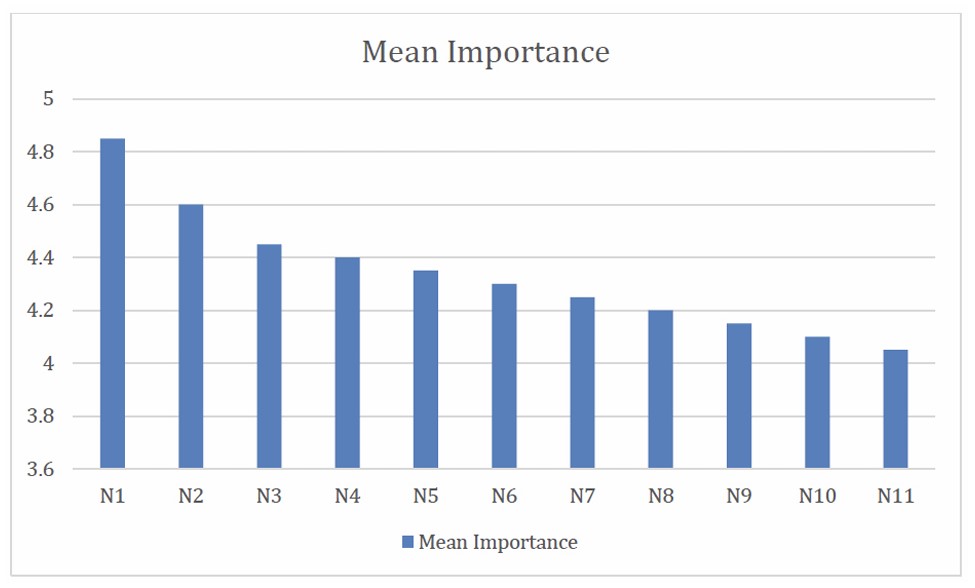
Comparison of the mean importance of supervisor challenges.
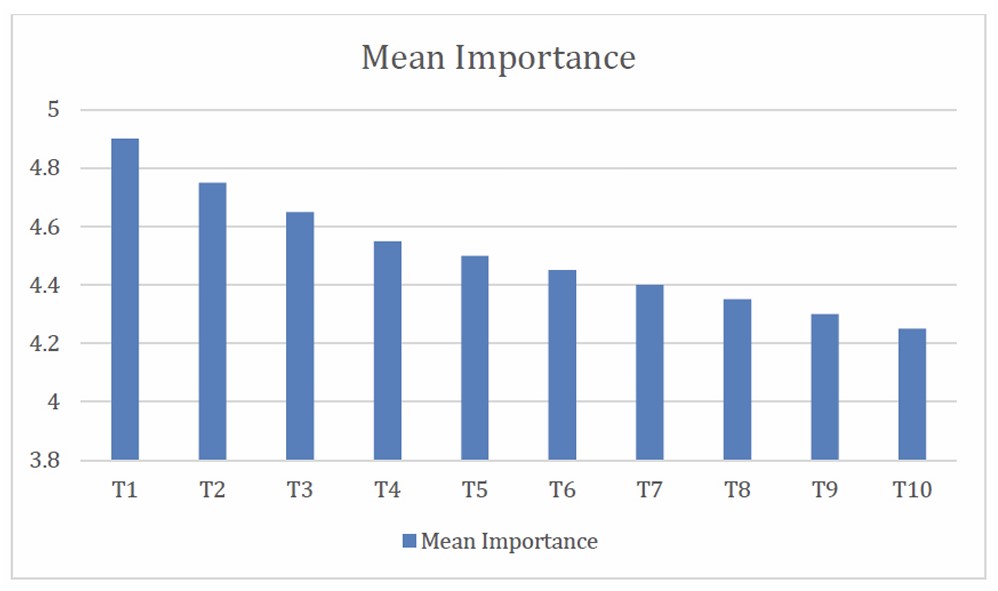
Comparison of the mean importance of monitoring tools and interactions.
The presence of multiple authorities in the construction process leads to reduced quality of construction. Supervisors holding multiple jobs; lack of implementation and agreement on a five-stage supervision process; discrepancies between fees and services provided; incomplete standardization of construction materials and components by the Building Materials Standards Committee; and shortages of specialized engineers in certain aspects of the National Building Regulations. Further issues include a lack of oversight on building facades and construction quality by architectural supervisors; the construction industry being an open field for all, regardless of professional expertise; weak oversight of the supervising engineers’ presence; direct financial relationships between property owners and supervisors in the absence of referrals; signature selling; engineers’ lack of awareness of the legal consequences of professional relationships; non-compliance with all aspects of the National Building Regulations; lack of a logical balance between the added value of violations and the fines imposed on violators; interaction issues between the Ministries of Labor and Social Affairs; Housing and Urban Development; and the Technical and Vocational Organization regarding the certification of construction workers; lack of coordination between the Ministries of Housing and Urban Development and Science; Research, and Technology regarding the alignment of university graduates’ skills with the needs of the engineering community; insufficient industry-related training in relevant university curricula; ineffectiveness of Commission 100 and its inconsistency with the National Building Regulations; implementation issues of the National Building Regulations concerning reinforced concrete buildings; deficiencies in municipal regulations regarding building dimensions, floors, and heights; negative consequences of issuing permits for repairs and modifications; and neglect of Chapter 22 of the National Building Regulations (Tables 2 and 3).
| Challenge Code | Challenge | Mean Importance (1-5) | Std.Dev. | Agreement % |
|---|---|---|---|---|
| N1 | Presence of multiple authorities in construction | 4.85 | 0.37 | 90 |
| N2 | Supervisors holding multiple jobs | 4.60 | 0.50 | 90 |
| N3 | Lack of implementation and agreement on a five-stage supervision process | 4.45 | 0.60 | 80 |
| N4 | Discrepancy between fees and services provided | 4.40 | 0.68 | 83 |
| N5 | Shortage of specialized engineers in certain sections of the National Building Regulations | 4.35 | 0.67 | 80 |
| N6 | Lack of oversight on building facades and quality by architectural supervisors | 4.30 | 0.73 | 75 |
| N7 | Weak oversight of the supervisors’ presence | 4.25 | 0.72 | 75 |
| N8 | Direct financial relationship between property owner and supervisor | 4.20 | 0.77 | 75 |
| N9 | Signature selling | 4.15 | 0.81 | 85 |
| N10 | Engineers’ lack of awareness of the legal consequences of professional relationships | 4.10 | 0.85 | 75 |
| N11 | Non-compliance with all sections of the National Building Regulations | 4.05 | 0.89 | 80 |
| Challenge Code | Challenge | Mean Importance (1-5) | Std.Dev. | Agreement % |
|---|---|---|---|---|
| T1 | Lack of logical balance between the added value of violations and fines | 4.90 | 0.31 | 95 |
| T2 | Incomplete standardization of construction materials | 4.75 | 0.44 | 90 |
| T3 | Ineffectiveness of Commission 100 | 4.65 | 0.49 | 90 |
| T4 | Implementation issues of the National Building Regulations in reinforced concrete buildings | 4.55 | 0.51 | 85 |
| T5 | Deficiencies in municipal regulations regarding setbacks, floors, and heights | 4.50 | 0.61 | 85 |
| T6 | Interaction issues between ministries of labor, housing, and the technical and vocational organization | 4.45 | 0.60 | 80 |
| T7 | Lack of coordination between Ministries of Housing and Science | 4.40 | 0.68 | 80 |
| T8 | Insufficient industry-related courses in university curricula | 4.35 | 0.67 | 85 |
| T9 | Negative consequences of issuing repair and modification permit | 4.30 | 0.73 | 75 |
| T10 | Engineers’ lack of awareness of the legal consequences of professional relationships | 4.25 | 0.72 | 75 |
The following points regarding challenges related to supervisors were derived from the interviews:
In our country, municipalities, the Ministry of Housing and Urban Development, and the Engineering Organization are responsible for construction activities. The presence of multiple authorities has led to a decline in the quality of construction. One interviewee considered the existence of the Engineering Organization futile, stating, “Construction should entirely be delegated to municipalities, and municipalities should issue construction permits to companies.” It should be noted that construction is recognized as a specialized and professional field in all countries, undertaken by engineers and architects. In recent years, with the growth of construction globally, engineering as a discipline has expanded, with new topics being added to the curricula of renowned universities worldwide. However, in our country, the basic characteristic of construction, its specialized and professional nature, is not adhered to, and there is still no clear law for builders to prevent non-professionals and unqualified individuals from entering this field. As one interviewee stated, “Anyone with any profession or knowledge can enter this industry and earn income without any accountability. There is no restriction for a doctor or a farmer who engages in construction in their spare time. In fact, anyone with significant capital enters the construction market, despite this profession being directly tied to people’s lives and property, where any negligence can have severe consequences.”
Another challenge is that supervisors often hold multiple jobs. Given the responsibilities and the requirement for the supervisor’s presence, there are cases where the supervising engineer, due to excessive workload, is unable to be present and perform supervision duties. According to Article 23 of the Engineering Organization Law, supervision consists of five stages:
a) Foundation work.
b) Structural framework.
c) rough construction.
d) Finishing work.
e) Project completion.
However, in practice, there is no agreement within the Engineering Organization on the number of supervision stages, and supervisors generally do not feel obligated to follow these stages.
Regarding the alignment of fees with services provided, it should be noted that supervisors are expected to be accountable for all building issues throughout their operational life. However, given the fee structure for engineers and the inflation rate, there is no appropriate alignment between fees and services rendered.
Concerning the incomplete standardization of construction materials and components by the Building Materials Standards Committee, the lifespan of a structure depends on its type and the materials used. Greater attention to such standards by builders not only extends the lifespan of buildings but also makes maintenance easier and less costly for users. In other words, using substandard materials in construction equates to wasting capital. One interviewee stated, “For the standardization of materials, the Building Materials Standards Committee meets every two months at the governor’s office. However, currently, less than one percent of construction materials and components are standardized, and even these are mostly not foundational materials.”
Regarding the shortage of specialized engineers in certain aspects of the National Building Regulations, it should be noted that improving the technical knowledge of professionals in the construction and urban planning sectors is the responsibility of the Ministry of Housing and Urban Development. One interviewee remarked, “Currently, some sections of the National Building Regulations, such as Chapter 18 (insulation and sound regulation), face a shortage of specialized engineers.” Another interviewee added, “We face a shortage of specialized engineers in all sections of the National Building Regulations.”
Regarding the lack of oversight on building facades and quality by architectural supervisors, it should be noted that architectural supervision involves ensuring that architectural operations comply with approved architectural designs and plans from the Engineering Organization and the issued municipal permit. This includes checking the type of finishing materials and facade work in terms of compliance with architectural designs, finishing schedules (including material type, texture, color, and specific characteristics), and adherence to Iran’s national standards [8]. According to one interviewee, “Unfortunately, the presence of architectural supervisors in construction projects is minimal, and facades, whether in terms of material quality, alignment with national and local culture, aesthetics, or safety and protection, are very weak. They are largely influenced by the tastes of speculative builders and the imitation of one builder’s work by another.”
According to the National Building Regulations, the supervising engineer must oversee contractors and the construction process. However, many contractors and builders currently complain about the absence of supervising engineers. While municipalities do not issue construction permits without a supervising engineer, many of these engineers, despite taking on supervision duties with numerous conditions, do not adequately monitor the construction process. Moreover, the Engineering Organization does not effectively oversee its performance. One interviewee stated, “After excavation and the start of construction, the supervising engineer must be present for the concrete pouring of each floor. Unfortunately, some supervising engineers not only fail to show up but also ask for municipal and Engineering Organization forms to be brought to their homes for stamping and signing.”
Regarding direct financial relationships between property owners and supervisors in cases not referred by the Engineering Organization, it should be noted that in instances (often in smaller cities) where work is not assigned by the Engineering Organization, a direct financial relationship exists between the property owner and the supervisor. In other words, supervisors become dependent on property owners and builders, and since the supervisor’s fee is paid by the owner, supervisors typically do not report violations.
Financial constraints, technical ignorance, and lack of awareness among property owners, particularly when the employer is not the end-user of the building, exacerbate this issue. This becomes particularly problematic when the employer builds the structure for sale rather than personal use.
Regarding the challenge of signature selling, one interviewee stated, “This issue arises, for example, when the year is nearing its end, and an engineer scrambles to utilize their remaining quota to avoid losing it. This urgency reduces the engineer’s diligence and precision.” Another interviewee noted, “Signature selling is more common in offices near municipalities when municipal staff direct property owners or employers to specific offices.”
The percentage of expert agreement on the most critical challenges is displayed in Fig. (3), where challenge T1 (presence of multiple supervisory authorities) obtained the highest consensus (95%).
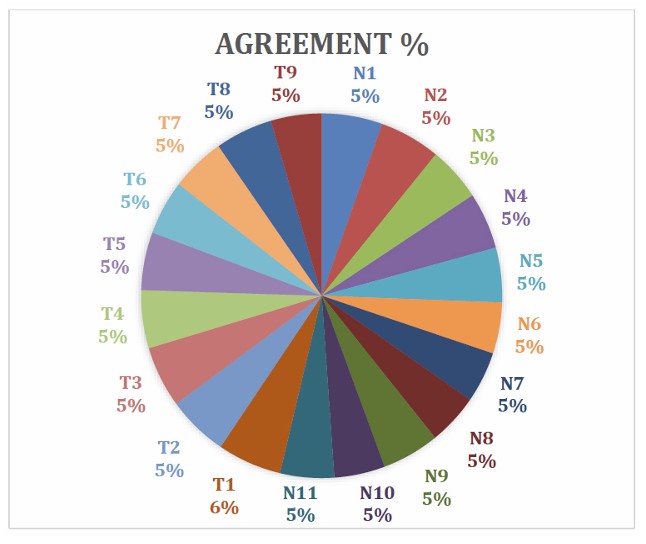
Expert agreement percentage for key challenges.
Description: Challenge T1 has the highest level of consensus with 95% agreement.
3.1. Challenges Related to Monitoring Tools and Interactions
Regarding the non-compliance with all sections of the National Building Regulations, it should be noted that not all 22 sections are currently implemented. Based on interviewees’ opinions, reasons for non-compliance include the following: Due to high costs and inflation, only a portion of the sections are implemented based on people’s financial capacity. One interviewee stated, “Due to the lack of enforcement of necessary standards by the Standards and Research Institute and the Ministry of Industry, Mine, and Trade, low-quality products are produced, and given the prevailing inflation in the country, people are generally reluctant to use standard products due to their high cost.” Other reasons include a lack of proper education and awareness, insufficient oversight by the Engineering Organization on engineers’ performance, and the fact that most buildings are constructed by owners who lack sufficient knowledge of construction regulations.
Another issue to consider is the lack of a logical balance between the added value of violations and the fines imposed on violators. According to one interviewee, “As long as urban planning and architectural violations are not considered crimes in our country, it will be impossible to deal with violators. The added value from violations far exceeds the fines, encouraging owners and builders to commit violations. Consequently, non-compliance with urban planning and architectural regulations has become a norm in the country, whereas in other countries, such violations are considered crimes, carrying penalties like imprisonment and requiring the restoration of the original state.”
Another challenge is the interaction issues between the Ministries of Labor and Social Affairs, Housing and Urban Development, and the Technical and Vocational Organization regarding the certification of construction workers. One interviewee noted, “From 2004 to 2009, the Ministry of Roads and Urban Development allocated a budget for training workers, which reduced the issue of a lack of skilled and trained workers. However, this practice was discontinued afterward.” Some interviewees stated that the Ministry of Labor and Social Affairs is responsible for certifying the qualifications of technical workers and issuing skill certificates, but this has not been fully implemented, with only a few workers certified. The shortage of certified workers results in critical tasks, such as welding in steel structures, not being performed accurately or professionally. The root of this issue lies in the lack of coordination between the Ministries of Housing and Urban Development, Labor and Social Affairs, and the Technical and Vocational Organization.
Another issue is the lack of coordination between the Ministries of Housing and Urban Development and Science, Research, and Technology regarding the alignment of university graduates’ qualifications with the needs of the engineering community. The Ministry of Housing and Urban Development is responsible for determining engineers’ qualifications and is fully aware of the required conditions for professional roles in construction. However, due to a lack of interaction between these ministries, there is no alignment between the quality of university graduates and the needs of the engineering community. One interviewee stated, “Scientific field visits in universities are very limited or nonexistent. When we request them, we are told they are not part of the curriculum, and the responsibility lies with the instructor.”
The ineffectiveness of Commission 100 and its inconsistency with the National Building Regulations are another challenge. Commission 100 is the primary authority for addressing construction violations and serves as a source of income for municipalities in Iran. This income is collected through Commission 100 under municipal law. One interviewee stated, “The financial benefits municipalities gain from construction violations through Commission 100 have intensified deliberate violations in urban construction. There is profiteering in Iranian municipalities where regulations and standards are effectively bought and sold.” Another interviewee added, “In my opinion, Commission 100 is entirely flawed because it overlooks any violation after a fine is paid, and then a completion certificate is issued.”
Regarding challenges in implementing the National Building Regulations for reinforced concrete buildings, it should be noted that Chapter 9 defines concrete as a construction material and outlines safety and integrity regulations for the design, calculation, approval, and supervision of reinforced concrete buildings. Supervisors are required to ensure that the concrete meets the strength, durability, and specific environmental requirements outlined in Chapter 9. One interviewee stated, “Supervisors lack the tools to determine the grading of concrete used or to measure its compressive and tensile strength. The slump test used by supervisors only provides a rough estimate of nominal concrete strength, specifically its workability (fluidity or stiffness).”
Deficiencies in municipal regulations regarding building setbacks, floors, and heights are another challenge. According to interviewees, property location plans are provided by owners, and setbacks are generally determined based on detailed urban plans or, in some cases, street profiles. However, significant issues are observed in determining building setbacks from existing streets or their height relative to street levels. Determining the floor level is often not feasible due to the lack of street profiles and the inaccuracy of detailed urban plans, making it impossible for municipal planning departments to assess existing property floors or determine new ones.
Regarding the negative consequences of issuing repair and modification permits, interviewees noted that municipalities issue such permits upon the owner’s request. These permits are intended for simple repairs but are often used for significant modifications. In some cases, owners obtain repair permits but undertake major building reconstructions. Dilapidated buildings, which are either very old (typically with load-bearing walls, sometimes combined with partial steel frameworks) or semi-old (with concrete or steel frameworks), are particularly problematic. Retrofitting very old buildings is nearly impossible due to high costs and implementation challenges. In semi-old concrete buildings, rebar is encased in concrete and inaccessible, and no materials easily bond with the concrete. Identifying weaknesses and retrofitting such buildings is extremely difficult, and welding steel plates or profiles onto concrete frameworks is not a viable solution, especially given the uncertainty about the quality and strength of the concrete used. Retrofitting semi-old steel structures is more feasible, but accessing beams, columns, and connections requires demolishing significant portions of finishing and rough construction, which is costly. Additionally, these buildings are often multi-unit, making agreement among owners challenging. Retrofitting such buildings does not always yield ideal results, and reconstructing dilapidated buildings to mask structural weaknesses can have negative consequences.
Regarding the neglect of Chapter 22 of the National Building Regulations, interviewees noted that current activities of municipalities and the Engineering Organization end once a building receives its completion certificate, leaving issues during the operational phase unaddressed. Chapter 22 pertains to building maintenance and repair, and while citizens worldwide allocate funds for building maintenance, in Iran, the Engineering Organization has not engaged in this area. To prevent incidents like Plasco from recurring, maintenance and repair must be prioritized.
4. DISCUSSION
The findings indicate structural and systemic challenges in monitoring the implementation of construction laws in Iran. Several reasons for non- compliance with construction regulations can be considered. Some researchers view construction violations as a natural outcome of urban growth and evolving needs. For instance, Fekade considers non-compliance with construction standards as part of the natural process of settlement development and urbanization [9]. Other researchers cite changing social and economic needs, the emergence of new groups through migration and new generations, urban regulations’ inability to meet these groups’ needs, inadequate housing supply, unresolved housing crises, imbalanced urban development, and unequal wealth distribution as reasons for non-compliance [10]. Another study highlights weak administrative and enforcement actions and unclear residential standards as reasons for non-compliance [11].
Another study suggests that inadequate and insufficient construction oversight, along with a lack of appropriate urban land reform policies, contribute to the failure to meet public needs and exacerbate issues related to illegal construction. It also identifies a lack of coordination among organizations involved in developing and implementing urban development regulations, as well as other organizational issues, such as a shortage of trained personnel, low wages, and bribery by construction inspectors, as factors affecting enforcement [12-14]. In our study, 21 factors were identified in two groups as primary reasons for non-compliance with construction laws and regulations.
4.1. Legal Challenges Related to Construction Supervisors
Legal challenges related to supervisors and non-compliance with laws and regulations are among the most critical factors highlighted by researchers [15-17]. Ethical and legal issues addressed by the government or institutions are challenges that align with this study’s findings [15]. The identified subcategories in this section include: the presence of multiple authorities in construction, supervisors holding multiple jobs, lack of implementation and agreement on a five-stage supervision process, discrepancy between fees and services provided, incomplete standardization of construction materials and components, shortage of specialized engineers in certain sections of the National Building Regulations, lack of oversight on building facades and quality by architectural supervisors, weak oversight of supervisors’ presence, direct financial relationships between owners and supervisors in non-referred cases, signature selling, and engineers’ lack of awareness of the legal consequences of professional relationships.
According to the referral law in the Engineering Organization, each engineer is annually assigned a specific supervision quota based on square footage, calculated using a specific formula for those with supervision licenses. For example, an engineer might be responsible for supervising 4,500 square meters annually, which could be divided into five 900-square-meter projects, one 4,500-square-meter project, or other configurations. Consequently, a supervisor may handle multiple projects simultaneously, impacting their work quality [18]. One of the issues raised by interviewees was supervisors holding multiple jobs. Before 2013, engineer selection was largely discretionary and traditional. However, since 2013, with the implementation of Article 33 of the Engineering Organization Law, referrals have been conducted legally and systematically [14]. Under the new referral system, engineers must register their information on their provincial Engineering Organization’s website according to new guidelines. It should not be overlooked that the referral law has mitigated issues such as assigning supervision tasks to individuals or legal entities, eliminating direct owner-supervisor financial relationships, and ensuring fairer work distribution [18].
The presence of multiple authorities in construction was one of the most significant issues raised in interviews. Currently, anyone with financial means can undertake construction or high-rise projects. Decision-makers and builders are often individuals without construction expertise, making decisions based on their preferences and altering specifications for economic gain or accessibility. This issue, frequently cited by interviewees as a major problem, can lead to catastrophic outcomes, as seen in cases like the Metropol Abadan disaster.
Standardization of construction materials and adherence to international, national, and local standards must be prioritized by builders. One challenge discussed in this study is the non-compliance with these standards by some local builders. Standardization and quality metrics are emphasized in other studies as well [19], with advancements leading to the use of higher, more specialized standards for smart buildings [20]. Non-compliance with standards can damage buildings and, more critically, harm people and society. Lack of technical standards and awareness regarding structural, fire, acoustic, thermal performance, economic sustainability, and prefabricated construction are similar issues of non-standardization [21, 22]. Another consideration is the mandatory standardization of materials based on regional climates, such as restrictions on using steel beams in high-humidity areas [7].
The shortage of specialized engineers in certain sections of the National Building Regulations was another identified challenge. One interviewee stated, “The shortage of specialized engineers is evident not only in some but in all sections of the National Building Regulations.” A lack of specialized human resources in various fields and even insufficiently trained workers can be problematic [23], as noted in other studies [24]. The importance of engineers’ awareness of the legal consequences of professional relationships and the need for training in standards, ethical, and legal issues is undeniable. Another studied challenge is the lack of education and the urgent need for pre-service and in-service training [22, 25-27]. Safety and self-protection training is another critical aspect that must be addressed [28-30].
Inadequate or flawed oversight by authorities has been discussed in various studies for years [31, 32]. Insufficient oversight can have multiple causes [33] and ultimately lead to numerous issues for buildings, their efficiency, lifespan, and, most importantly, public safety [23, 34]. If oversight begins at the inception of construction and continues systematically, it can mitigate these issues.
Engineers’ lack of awareness of the legal consequences of professional relationships was frequently mentioned by interviewees. Legally, a supervising engineer who oversees a building and signs off on it is accountable for any issues arising from construction for 30 years from the date of signing, a responsibility often neglected by supervisors [35]. When considering this responsibility alongside supervisors’ fees, the discrepancy between fees and services provided is evident.
4.2. Challenges Related to Monitoring Tools and Interactions
In this study, the identified subcategories in this section include: non-compliance with all sections of the National Building Regulations, lack of a logical balance between the added value of violations and fines, interaction issues between the Ministries of Labor and Social Affairs, Housing and Urban Development, and the Technical and Vocational Organization regarding worker certification, lack of coordination between the Ministries of Housing and Urban Development and Science, Research, and Technology regarding the alignment of university graduates’ qualifications with engineering needs, insufficient industry-related courses in university curricula, ineffectiveness of Commission 100 and its inconsistency with the National Building Regulations, implementation issues with the National Building Regulations for reinforced concrete buildings, deficiencies in municipal regulations regarding setbacks, floors, and heights, negative consequences of issuing repair and modification permits, and the neglect of Chapter 22 of the National Building Regulations.
Studies in construction engineering indicate that low construction quality in the country results from non-compliance with the National Building Regulations, flawed construction management cycles, the presence of multiple unclearly accountable authorities, resistance to industrializing construction, use of non-standard materials or fraudulent certifications, superficial inspections without attention to substance, and unclear quality control methods [36].
The lack of construction laws and protocols tailored to societal needs is an identified challenge. The absence or deficiencies in existing protocols can reduce quality and effectiveness in construction. Numerous studies emphasize the need for developing, implementing, and monitoring such protocols [37]. The lack of standard protocols can affect construction execution [38]. While protocols need standardization, some flexibility in certain clauses to meet regional needs is necessary [39]. This issue is not unique to Iran and is a challenge in other regions worldwide [40].
Regarding the ineffectiveness of Commission 100, it should be noted that Commission 100 is a specialized municipal authority, separate from the municipality but based within it. Its members include representatives from the Ministry of Interior, the judiciary, the city council, and the municipality, with the municipal representative present only to provide explanations without voting rights [41]. This law primarily addresses violations of urban planning and national regulations, covering issues such as construction without a permit, excessive density, lack of or unusable parking, encroachment on public spaces, unauthorized change of use, insufficient structural integrity, and non-compliance with technical, sanitary, and urban planning principles [41].
The lack of a logical balance between the added value of violations and fines is a recognized challenge. A precise and dynamic system for assessing violations and determining fines can significantly aid managers and policymakers. This involves identifying needs, recognizing violations based on laws and protocols, and setting fines proportional to the damage caused. The need for an effective violation detection and fining system is supported by other studies [42-44].
Constructive interaction among relevant entities is essential. Any disruption in communication reduces effectiveness. The importance of constructive and effective interactions between relevant ministries and the bridge between industry and academia must be emphasized. Studies highlight the importance of such interactions [45]. Poor communication is a primary cause of conflicts among construction stakeholders during projects [46]. Beyond high-level managerial interactions, fostering dialogue and interaction at lower levels is also necessary. Lack of communication between consultants and contractors is a cause of project delays [47]. Since university graduates enter the workforce, constructive interaction and education tailored to societal needs must be prioritized.
CONCLUSION
It is evident, particularly from recent incidents like the Metropol Abadan and Plasco disasters, that construction in our country faces numerous challenges, which, if unaddressed, could have serious adverse consequences.
Currently, anyone with financial means can undertake construction or high-rise projects. Decision-makers and builders are often individuals without construction expertise, making decisions based on their preferences and altering specifications for economic gain or accessibility. Owners act as executors and decision-makers, doing as they please, while municipalities lack the resources and time for adequate oversight. The cost of violations does not serve as a deterrent, effectively providing an escape for profiteers. As long as municipal revenue depends solely on construction, violations are overlooked in exchange for fines. Additionally, the affordability and availability of non-standard construction materials exacerbate the issue, making the use of low-quality materials cost-effective. Until the production, distribution, and use of standard construction materials are mandated, voluntary compliance through persuasion or campaigns will not suffice.
AUTHORS’ CONTRIBUTIONS
The authors confirm their contribution to the paper as follows: R.A.: Data collection; S.S.: Data analysis and interpretation; H.A.: Methodology; S.M.: Writing-original draft preparation. All authors reviewed the results and approved the final version of the manuscript.
ETHICS APPROVAL AND CONSENT TO PARTICIPATE
Ethical approval was obtained from the Research Ethics Committee of Kerman University of Medical Sciences, Iran (Approval Code: IR.KMU.REC.1401.259).
HUMAN AND ANIMAL RIGHTS
All procedures performed in studies involving human participants were in accordance with the ethical standards of institutional and/or research committee and with the 1975 Declaration of Helsinki, as revised in 2013.
CONSENT FOR PUBLICATION
All participants were fully informed about the study objectives and procedures, and written informed consent was obtained from each participant prior to the first round of the Delphi process.
AVAILABILITY OF DATA AND MATERIALS
The data supporting the findings of the article will be available from the corresponding author [H.A] upon reasonable request.
FUNDING
This study was funded by the National Institute for Health Research, Tehran University of Medical Sciences, Iran.
ACKNOWLEDGEMENTS
This research was conducted with financial support from the National Institute for Health Research, Tehran University of Medical Sciences, Iran.